

“Dangerous” is an adjective frequently used when describing tigers, a perception of threat that has perpetuated through years of depiction in films. Over time, this majestic animal has gained significant popularity in the entertainment industry, and especially in cinema. The tiger has been used to represent and convey ideologies, becoming a powerful symbol within different socio-political narratives.
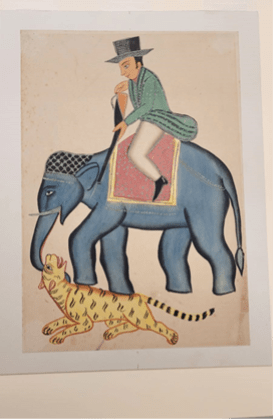
The tiger plays a cultural role in East and Southeast Asia, particularly in India, where it has been iconically represented in various artistic objects. For example, a 17th century Ragini painting shows the harmonisation between humans, animals and the natural world where the tiger is represented as a pet. Conversely, in the 19th century a painting from the Kalighat depicts an Englishman on an elephant shooting a tiger, inferring the threat the creature is seen to pose.
This contrast between fear and harmony extended to cinema, where early films such as The Jungle Princess (1920) or The Tiger’s Claw (1923) depicted tigers as antagonists attacking human-inhabited environments. Tigers are also used to simulate a perceived relationship between wildlife and humans as one of hostility, defined by an unequal power relationship. Evaluating portrayals, such as those in early 20th-century film, reveals an emphasis on the theme of predator-prey, corroborating with colonial paintings from the 19th century which perpetuate the human desire to dominate the natural world.
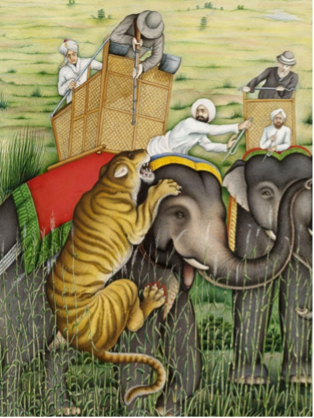
One particular theme that has been emphasised when portraying tigers in colonial-themed films is the role of human gender. Colonial-themed films often portray women as weak and defenceless when attacked by tigers (the gender of the tiger in most cases is never mentioned) and are often in need of help from the male protagonist to survive. This greatly contradicts Indian paintings, for example a 19th-century Mewar painting which depicts Indian women hunting tigers by themselves, giving a completely different perception of how gender roles were represented and projected in society.

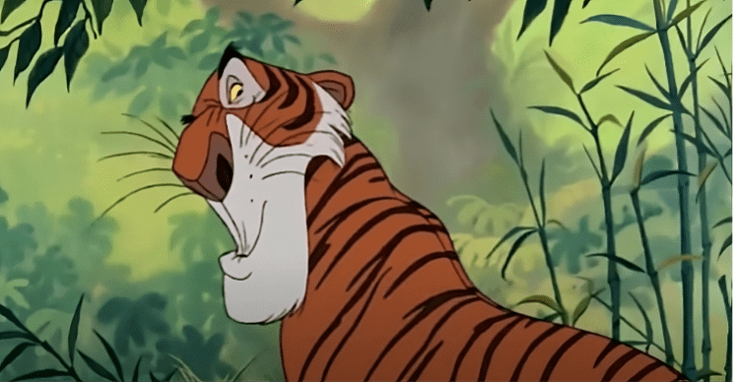
These changing perceptions and ideologies regarding gender are therefore promoted through the portrayal of the tiger and can be also found in films aimed at children. The Jungle Book animation, for example, has also influenced tiger portrayal and children’s perception of the animal. It emphasises the dangerous reputation of the tiger by using an anthropomorphic approach when creating the animal’s character. Sher Khan both contradicts and pushes stereotypes by being portrayed as an educated male aristocrat (evil aristocrat in the animation) seeking power and control, perpetuating the views on male superiority and introducing social class to a younger audience.
Post-colonial-themed films (50s –80s), on the other hand, marked a significant shift, promoting themes of coexistence and even friendship with tigers. An example of this is a quote from the movie A Tiger Walk (1964) where a young girl says, “A tiger; that’s what he was born to be… so you can’t blame him” which again reflects gender roles where women are perceived to have a gentler, motherly approach toward the animal. These films responded to changing socio-political landscapes, such as the increasing importance of wild animal protection (exemplified by “Project Tiger”, created in 1973 by the Indian government, which promotes the protection of tigers). Moreover, these films expressed emerging nationalist sentiments, whilst also reflecting a growing emphasis on the preservation of wildlife.

Exploring how tigers are depicted in movies and paintings is a fascinating journey into their symbolic and ideological roles in society. By looking at these portrayals through the lens of art history, we can see how different media shape our views on wildlife and reflect societal values. It’s amazing to see how these representations can either challenge or reinforce stories about nature and conservation. Through this exploration, we uncover the layers of meaning and significance attributed to tigers, revealing the complex interplay between cultural narratives and our perceptions of the natural world.
This perspective adds depth to conversations about heritage, environmental stewardship, and biodiversity conservation worldwide. It highlights the timeless cultural significance of tigers, showing them not just as creatures of wonder but as powerful symbols of our evolving relationship with the natural world. By understanding these artistic depictions, we gain a richer appreciation for how tigers inspire dialogue about our responsibilities toward nature and the environment. Ultimately, this approach enriches our understanding of tigers as emblematic figures, reflecting our collective aspirations and ethical considerations concerning wildlife and conservation.
Farah Benbouabdellah 2nd year PhD candidate at the University of Reading currently doing interdisciplinary research with both the Department of Archaeology and the Department of Film, Theatre, and Television. Find Farah on LinkedIn HERE
 Cinema and Social Justice PROJECT
Leave a comment