
Claire Henry
The release of Black Panther (2018) stands as a landmark in cinematic history. Wakanda, a fictional technologically advanced country, introduces audiences to Afrofuturism, a visionary reimagining of Black reality, where Black voices take center stage. Untouched by white colonialism and powered by vibranium, Wakanda became a symbol of Black excellence, resilience, and innovation. Holding great significance for its time, being the first Black superhero blockbuster with a Black director, earning $1 billion at the box office, and showcasing a majority Black cast, Black Panther paved its way towards numerous Oscar nominations.
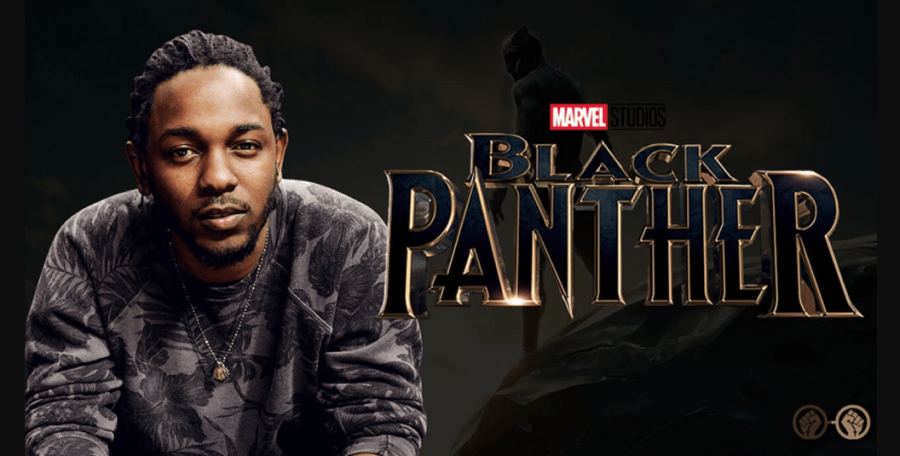
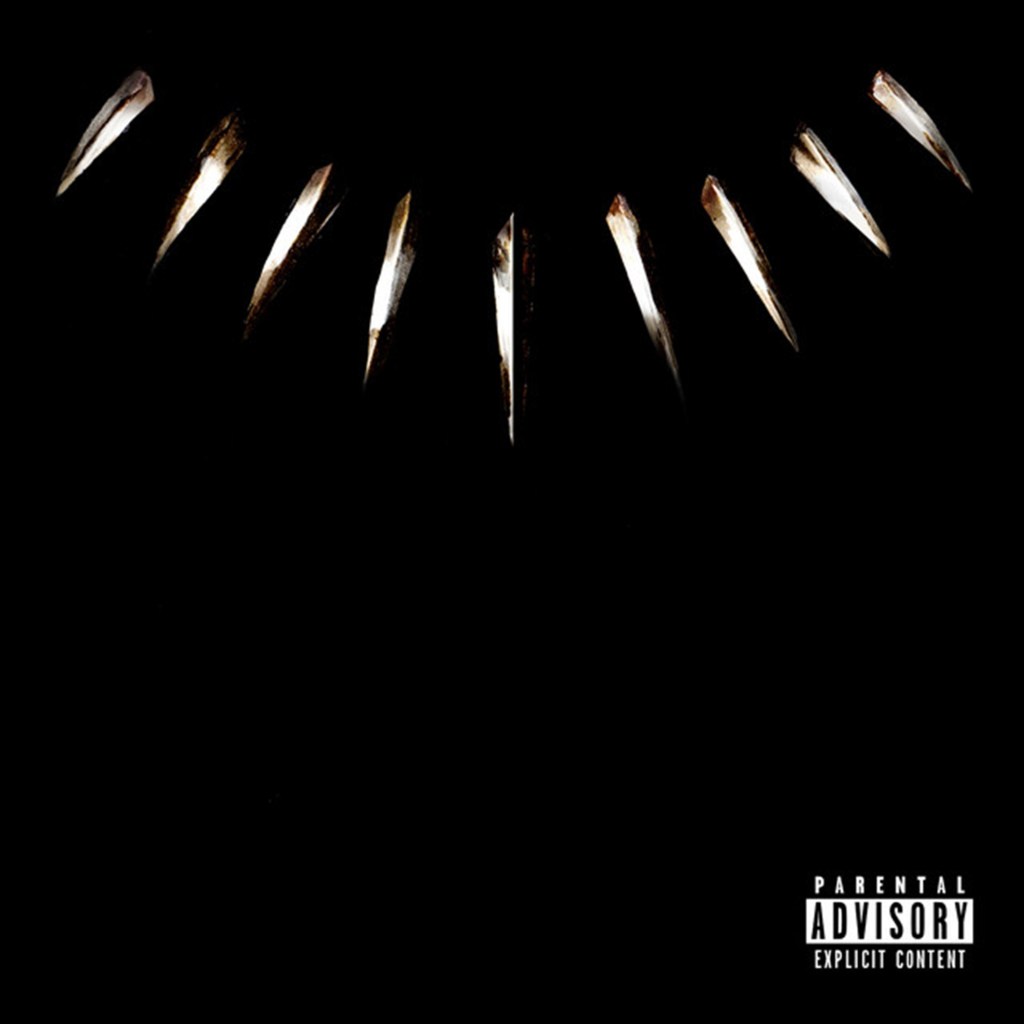
At the core of Black Panther‘s cultural impact was not only its visual storytelling but the soundscape that accompanied it. Pulitzer Prize-winning rapper Kendrick Lamar curated an album inspired by the film that reflected its Afrofuturist themes. Lamar’s album brought Black voices and stories to the forefront, using the music’s power to delve deeper into the film’s exploration of Black identity, moral conflict, and liberation.
Defining Afrofuturism through Sound
“Afrofuturism,” coined by Mark Dery in 1994, arose from the lack of Black representation in science fiction. It merges Black culture with futuristic, speculative narratives, and places Black people at the center of their own stories. Music has long been an essential component of Afrofuturism, allowing Black artists to express their history, struggles, and visions of the future. Artists like Missy Elliott and OutKast, with their futuristic visuals and sound, are early pioneers of Afrofuturistic themes in music.
Lamar’s Black Panther soundtrack redefined this concept, blending traditional African sounds with contemporary rap and hip-hop to reflect both the struggles and aspirations of Black people globally. His music tells the story of the film’s two key characters—T’Challa, the titular Black Panther and king of Wakanda, and Killmonger, the anti-hero with a more aggressive view of Black liberation and challenger to the Wakandan throne. The album acts as a narrative extension of the film, exploring the ideological tension between these two characters and their differing approaches to power and freedom.
Lamar’s Vision: Merging Fiction and Reality
The first track, “Black Panther,” exemplifies Lamar’s blend of real-world and fictional Black struggles. Lamar voices T’Challa’s inner conflicts, connecting the fictional character’s responsibilities with real-world issues faced by Black communities. Lamar lyrically explores themes of identity, power, and cultural heritage, while the music’s combination of African rhythms and futuristic beats creates a sonic landscape mirroring Wakanda’s technological advancements.
Lamar also addresses contemporary issues such as police brutality, institutional racism, and social injustice. In the track “Opps”, the lyrics reflect the constant threats Black people face, echoing the experiences of Killmonger, who is shaped by the systemic racism he has encountered growing up outside of Wakanda, in America. The juxtaposition of Wakanda’s utopian society with the harsh realities of Black life in America is a powerful feature of both the film and the album which audiences can reflect on.
The Power of Collaboration
The Black Panther album features a mix of international artists such as American R&B singer SZA and South African musician Sjava, who sings in Zulu. This collaboration brings a global dimension to the soundtrack, highlighting the complex, multifaceted nature of Black identity. The music transcends borders, connecting African roots to African-American culture and the broader Black diaspora.
Composer Ludwig Göransson, despite being white, significantly contributed to the portrayal of Wakanda’s sonic identity in its soundtrack. Through research and collaboration with Black musicians, his incorporation of traditional African instruments, including the talking drum, alongside modern beats from the Roland TR-808 drum machine, not only showcased his expertise but also highlighted his commitment to featuring and amplifying Black voices from around the world. This sonic fusion not only deepened the film’s Afrofuturistic themes but also reinforced the connection between Black cultural heritage and future possibilities.
Redefining Afrofuturism
Lamar’s contribution to the Black Panther soundtrack redefined Afrofuturism in music by grounding the elements of Wakanda in the real-life struggles and aspirations of Black people across the globe. By combining African rhythms with hip-hop beats and lyrics that speak to contemporary issues, the album creates a bridge between the past, present, and future of Black culture.
Final Thoughts
Afrofuturism, as expressed through Lamar’s brilliant soundtrack, is not just a celebration of Black culture but a reclamation of Black identity. The music reflects the idea that Black people, despite centuries of oppression, are creating their own futures—futures that are rooted in their history but are also forward-looking and innovative. In so doing, it amplifies Black voices and stories, helping to reshape the narrative around Black identity in mainstream media. This soundscape, much like the Black Panther film itself, envisions a future where Black excellence thrives, unhindered by the limitations imposed by colonialism or systemic oppression.
Claire Henry is a Californian native in her 4th year of study, pursuing a Master of Arts Honors undergraduate degree at the University of St Andrews in Film Studies and Sustainable Development. Her research interests span Racial Justice, Feminist Studies, Eco-cinema, and sustainability within the film industry. Currently, she is working on her honors dissertation, which explores how gender diversity in leadership roles within film production fosters more sustainable workspaces and ethical storytelling.
LinkedIn: www.linkedin.com/in/clairelhenry
Facebook: https://www.facebook.com/clairee.henryy/
Instagram: https://www.instagram.com/clairee.henryy/
Bibliography
Bradley, Adam, Andrew Dubois, Henry Louis, Chuck D, and Musician Common. 2010. The Anthology of Rap. New Haven: Yale University Press.
Brown, Julie, Marcia J. Citron, Eric Dienstfrey, Erik Heine, Julie Hubbert, Brooke McCorkle, Cari McDonnell et al. 2020. Voicing the Cinema: Film Music and the Integrated Soundtrack. Champaign: University of Illinois Press.
Coogler, Ryan, dir. 2018. Black Panther. Film. United States of America: Marvel Studios / Walt Disney Pictures.
Genius. 2019. The Making of ‘Wakanda’ with Ludwig Göransson Presented by Marvel Studios Black Panther. YouTube Video. YouTube. https://www.youtube.com/watch?v=fcO5klPyfX4.
Göransson, Ludwig. 2018. Song Explorer: Ludwig Göransson – Black Panther. Radio Broadcast. PRX. https://beta.prx.org/stories/233812.
Griffin, Rachel Alicia, and Jonathan P. Rossing. 2020. ‘Black Panther in Widescreen: Cross-Disciplinary Perspectives on a Pioneering, Paradoxical Film’. Review of Communication 20 (3): 203–19. https://doi.org/10.1080/15358593.2020.1780467.
Friedman, Ryan Jay. 2011. Hollywood’s African American Films: The Transition to Sound. Rutgers University Press. pp. 127-234.
IMDb. 2018. Black Panther. IMDb Inc.. https://www.imdb.com/title/tt1825683/awards/.
Lamar, Kendrick. 2018. Black Panther. Record. United States: Top Dawg Ent/Aftermath/Interscope Records.
Lamar, Kendrick, and Yugen Blakrok. 2018. Opps (with Yugen Blakrok). Record. United States: Top Dawg Ent/Aftermath/Interscope Records.
Lamar, Kendrick, and SZA. 2018. All the Stars (with SZA). Record. Genius. United States: Top Dawg Ent/Aftermath/Interscope Records.
Niessen, Niels. 2020. ‘Black Panther Transmedia: The Revolution Will Not Be Streamed’ Journal of Cinema and Media Studies 60, no. 5: 121-149.
P. Ramsey, Guthrie. 2004. Race Music: Black Cultures from Bebop to Hip-Hop Berkeley: University of California Press. 2004.
Robert, Stam, and Spencer Louise. 1985. Colonialism, Racism, and Representation: An Introduction. Movies and Methods, Berkeley: University of California Press. pp. 315-320.
Rosana, Rosana, and Massimo Canevacci, eds. 2018. Lusophone Hip-Hop. “Who We Are” and `Where We Are’: Identity, Urban Culture and Belonging. Wantage: Sean Kingston Publishing.
Saponara, Michael. 2018. ‘Every South African Artist Featured on ‘Black Panther the Album’: A Quick Introduction.’ Billboard. February 9, 2018. https://www.billboard.com/music/rb-hip-hop/black-panther-the-album-south-african-artists-8098958/.
Schoen, Max. 1927. The Effects of Music. London: Kegan Paul, Trench, Trubner & Co., Ltd.
Sideways. 2018. How the Music in Black Panther Tells a Story. YouTube Video. YouTube. https://www.youtube.com/watch?v=gVVS7gsm9N0.
Sikdar, Atoshi. 2018. ‘Black Panther: An Analysis of the Musical Score and the Identity(s) It Creates’. Sophia College Mumbai. https://sophiacollegemumbai.com/img/Chapter4-BlackPanther-AnAnalysisoftheMusicalScore-AtoshiSikdar.pdf.
Stoppe, Sebastian. 2021. ‘Original soundtrack: On the meaning and significance of film music albums’. New theories 3, no. 1. pp. 46-72.
 Cinema and Social Justice PROJECT
Leave a comment