

Ren Anthony
To celebrate Black History Month, York St. John’s Film Society, in collaboration with the Cinema and Social Justice Project, hosted a screening of Ryan Coogler’s Sinners (2025). The film itself represents an important movement across contemporary media, where there is a duly recognised space, as well, for films which challenge a predominantly white-oriented cultural perspective.
Celebrating Black History Month, and promoting awareness and allyship within the arts was pertinent to this screening. Embracing the Cinema and Social Justice Project’s mission to view issues of inequality through the medium of film, the society discussed options for texts that celebrated Black pride, defined here as ‘a declaration of the beauty, resilience, and unmatched contributions of Black culture to the world’ (blackhistorymonth.org.uk, 2025). We proposed these options to our members, with Sinners gaining the most votes by a landslide. The film itself has received both critical and social acclaim, with continued discussion of its meanings appearing across journalistic and social media platforms, as well as in its reception at this screening, where it even received an enthusiastic round of applause.
The film itself centres on a significant conversation around the cultural appropriation of African American artistry, dialects, and musicality, symbolised particularly by its unwavering depiction of America’s violent Jim Crow South of 1932. The expository first act sets itself against the rural Mississippi Delta, a historical environment which grounds the film in the shadow of slavery, set against the violent oppression still perpetuated by segregation. The depiction of the South as its own geo-historical character in Sinners demonstrates the community within to be haunted by the echoes of (supposedly outdated) racist violence, transposed onto the denouement’s vampiric invasion. Particularly in the context of racially-motivated, becoming worryingly more pronounced under current global leaderships, highlighting stories centering marginalized communities can simultaneously challenge the attempted erasure of Black history, as well as highlight parallels between the oppression of the past, and how it carries forth to the present. To recognise the legacy of bigotry, and how it has been carried forth, one must pay attention to the provocative conversations influenced by media like Sinners.

The vampiric aspects of the film’s second half interweaves meditations upon the past, the origins of Blues music, and the parasitic nature of appropriation. As Delroy Lindo’s character, Delta Slim, says their white oppressors enjoy the blues “just fine, they just don’t like the people who make it”. The art itself is embraced, whilst the artist’s right to exist free from subjugation and prejudice is denied. As Coogler remarked, speaking to Little White Lies,
‘in studying this era of my country’s history, that’s very glossed over…it became a vehicle for reaffirming the humanity of the people at that time. Because that’s what they were doing when they invented this music. It was an affirmation of humanity at a time when that was being denied. And there’s obviously a sadness in that, but also an incredible beauty’ (lwlies.com, 2025).
This rhetoric is developed by the film’s genre-blending of historicity, and its significance upon the Southern Gothic. Speculative horror is here used to focus upon the traumatic footprint of America’s multiple violences against racial ‘otherness’. Coogler’s film uses these sensibilities to acknowledge the marks of colonial violence perpetuated against Black communities across America’s past, and present, and the delicacy in preserving histories and cultures that oppressive regimes could not stifle.
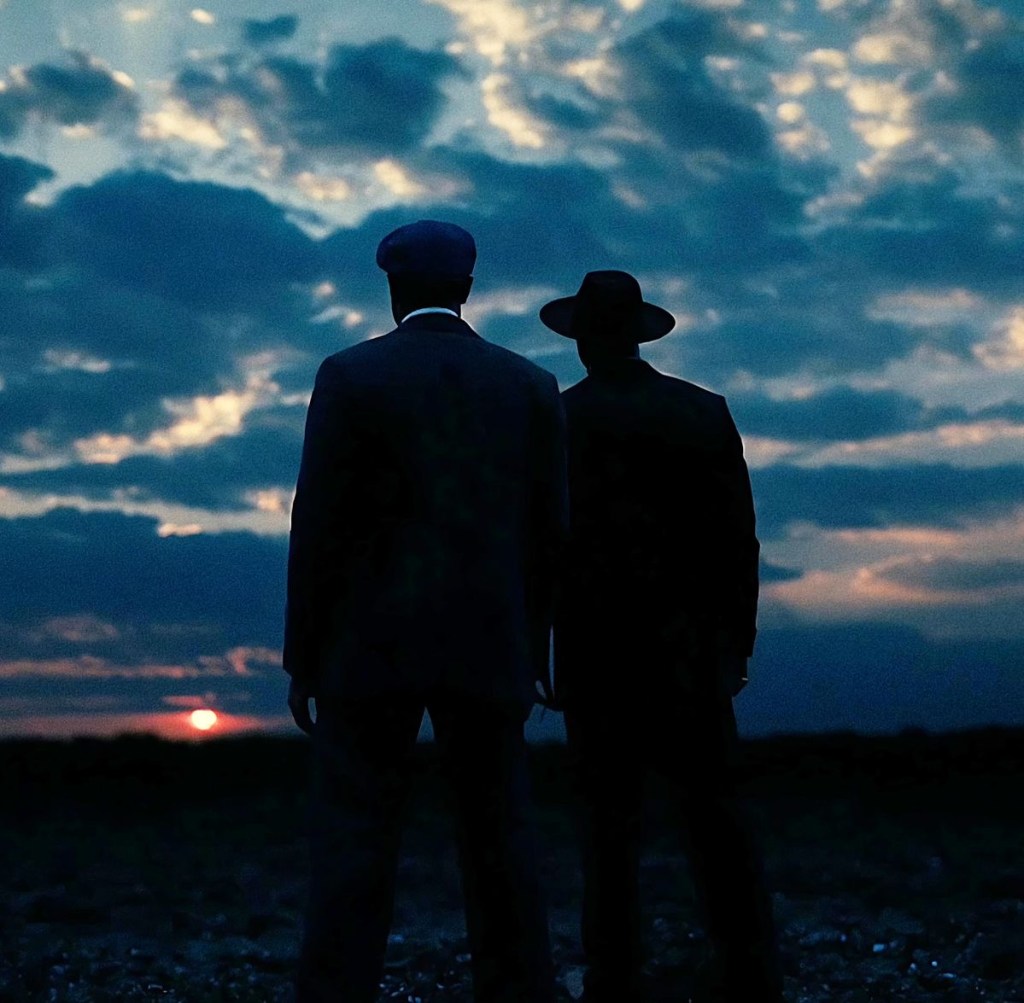
The role of artistry, where it has historically been seized by white cultural appropriation, is a conversation which film society wished to platform at this screening. In showing Coogler’s provocative narrative, and encouraging discussion between the members afterwards, the committee hoped to continue this analytical dialogue, by encouraging its members to reflect on its messages and cultural prevalence.
Ren Anthony is in their third year of BA Film Studies at York St. John University, and has worked alongside the YSJ Film Society Committee as part of this screening. They are currently working on their Undergraduate dissertation on spatiality and elaborated time in the films of Kelly Reichardt, and also contribute to the department’s annual publication, Neutral Magazine.
Bibliography:
Campbell, K. (2025) Interview: Ryan Coogler: ‘I’m more confident in my film language than I am in my English’. Little White Lies [online]. Available at: https://lwlies.com/interviews/ryan-coogler-im-more-confident-in-my-film-language-than-i-am-in-my-english
Entin, J. B. (2023) Living Labor: Fiction, Film, and Precarious Work. University of Michigan Press. Available at: https://www-jstor-org.yorksj.idm.oclc.org/stable/10.3998/mpub.11738099
Holloway, J. S. (2013) Jim Crow Wisdom: Memory and Identity in Black America since 1940. University of North Carolina Press. Available at: https://www-jstor-org.yorksj.idm.oclc.org/stable/10.5149/9781469610719_holloway
Thomas, L. (2025) “We’re Recreating the Devil’s Music”: Composer Ludwig Göransson on Sinners. Sight and Sound. April 2025. London: British Film Institute. Available at: https://www.bfi.org.uk/interviews/were-recreating-devils-music-composer-ludwig-goransson-sinners
 Cinema and Social Justice PROJECT
Leave a comment