
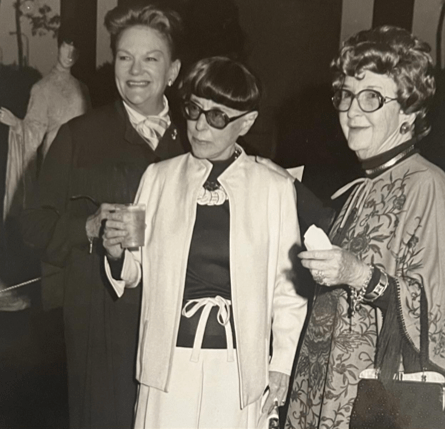
Helen Warner
In his book Hollywood Costume, David Chierichetti acknowledges the considerable and unseen labour of ‘thousands of expert seamstresses, cutters and fitters, milliners and wardrobe men and women, working long hours with little reward, [who] made the brilliant concepts reality.’[i]
Historic patterns of gender and racial discrimination built into the screen industries have resulted in a failure to recognise costume work as important creative labor, and render invisible the contribution of these skilled practitioners. Take Sheila O’Brien for example. O’Brien dressed Judy Garland in her ruby slippers for The Wizard of Oz and designed some of Joan Crawford’s most memorable gowns. Despite earning an Academy Award nomination for Sudden Fear in 1952, for most of us she is an unknown name.
Moreover, O’Brien’s impact on the industry can also be felt in her work off-screen, securing equal pay and better working conditions for fellow costumers as part of IATSE Local 705. As feminist researchers, it is our duty to recover these forgotten histories and acknowledge the massive contribution women like O’Brien have made to the screen industries.
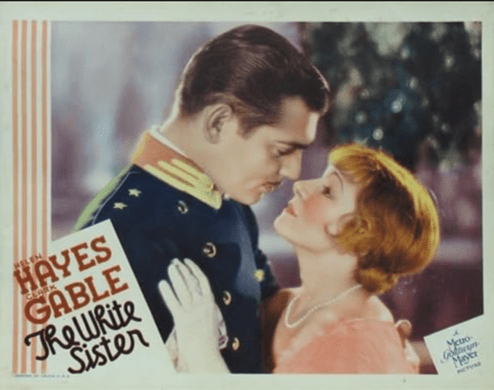
Born in Texas in 1902, O’Brien moved to California in the late 1920s in the hope of becoming an actress: ‘it wasn’t that I thought I could be such a great actress’, she claims, ‘Basically, everything I did in my life has been shaped by the need for money, because of the grinding poverty that we grew up in’.[ii] Initially, she worked as a waitress in a Hollywood restaurant. One of the regulars, Charlie Chaplin, was just beginning to become a household name. She started getting small parts in pictures including The White Sister (1933). However, as the Great Depression hit acting jobs dried up. She recalls that at one time she lived for ‘10 days on fifty cents’.[iii] Facing abject poverty, O’Brien walked into Paramount Studios wearing clothes she’d made and asked for a sewing job. She recalls ‘I think the first help I got was from Frank Richardson in the Wardrobe Department at Paramount, who understood what it was to be young [and] broke in the middle of the depression. He hired me, I don’t think I could have survived without him.’[iv]
She was hired for $16.80 a week. There was no union, no overtime, only demanding schedules with very tight budgets. At Paramount, she learned to be a cutter and a fitter, before moving to MGM as a costumer.
O’Brien of the first organisers of the Motion Picture Costumers Union (IATSE Local 705) and served on its first board of directors in 1937. Before her death in 1980, she was the last surviving signator on the original charter. She was known for ‘being tough when it’s necessary for business’.[v] Despite claiming not to be ‘one of these wild-eyed feminist’,[vi] she was instrumental in organising the women in the Paramount workroom:
the cutters fitters and seamstresses. They were being discriminated against terribly. One time I found out the janitors were getting $1.05 an hour and the women were getting 70 cents. I just couldn’t stand it… We got tremendous increases exclusively for these women. The tailors had traditionally gotten more money because they were men.[vii]
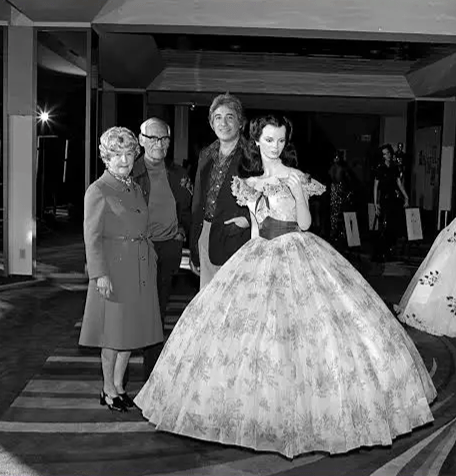
She then worked as an assistant for costume and fashion designer Irene (Gibbons) and unexpectedly became a costume designer when some of her personally designed gowns for Joan Crawford were used in the film Humouresque in 1946. She went on to work with Crawford for 10 years and would later found the Costume Designer’s Guild, turning it from a professional organisation to a recognised labour union (IATSE Local 892), and serving as president.
O’Brien’s story is not well known and often relegated to footnotes in biographies of Joan Crawford. Indeed, reconstructing histories such as hers are compounded by a lack of visibility in the archives. But recovering them is crucial. Feminist historical research has an important role in exposing the inequalities that are often baked into an industry’s foundations. These inequalities are normalised overtime and if we don’t take the trouble to revisit them, and challenge them, we reproduce them. So, to use Melanie Bell’s terms, it is vital that we continue to ‘write histories that disrupt the present’.[viii]
[i] David Chierichetti, Hollywood Costume Design, New York: Macmillan, 1976, 10.
[ii] Sheila O’Brien in Eleanor F. Humphrey, The Creative Woman in Motion Picture Production, Unpublished Master’s Thesis, University of Southern California, 1970, 328
[iii] O’Brien, The Creative Woman in Motion Picture Production, 329.
[iv] O’Brien, The Creative Woman in Motion Picture Production, 332.
[v] David Chierichetti, “Shelia O’Brien,” Film Fan Monthly, October 1978, 24.
[vi] O’Brien, The Creative Woman in Motion Picture Production, 335.
[vii] O’Brien, The Creative Woman in Motion Picture Production, 337.
[viii] Melanie Bell, Movie Workers, Chicago: University of Illnois Press, 2021, 14
 Cinema and Social Justice PROJECT
Leave a comment