
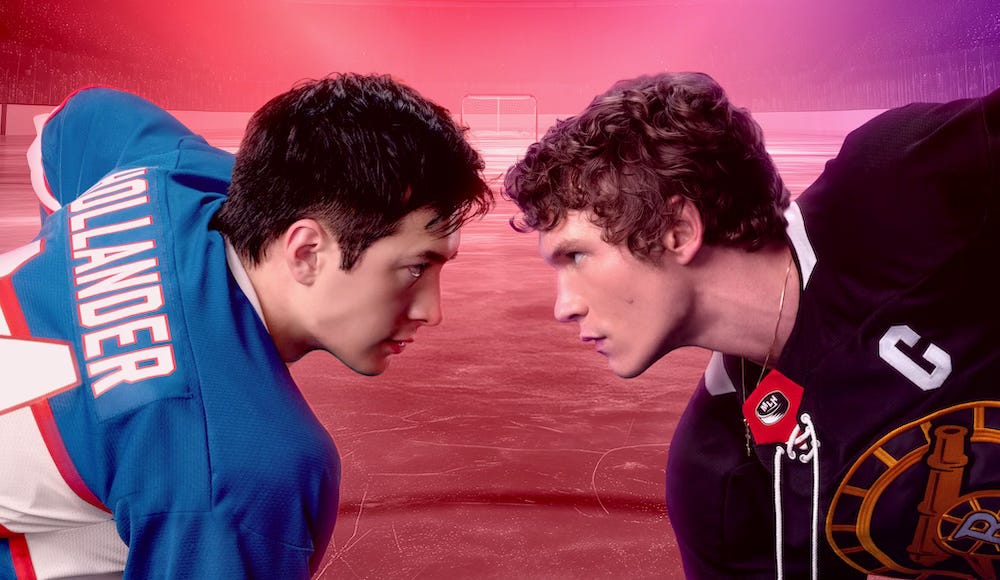
Ki Wight
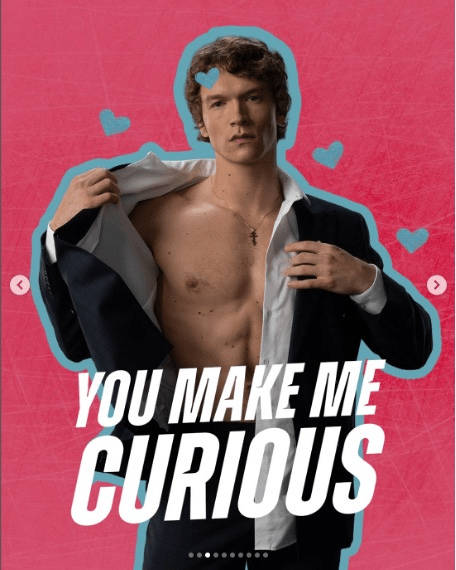
Joey Soloway’s 2016 Toronto International Film Festival talk titled ‘The Female Gaze’ established that a story world can be created beyond the well-worn objectifying male gaze, one that prioritizes a visual depiction of emotional awareness, what they call a ‘feeling seeing’ (17:35). This feeling that is elicited in the viewing process occurs because the story, cinematography, and performances are constructed to elicit empathy through making it easy to see when characters face and refuse objectification, and how this feeling is complicated by social context and intersectional experience. For Soloway, ‘feeling seeing’ usually arises when ‘a protagonist is not a cis male’ (17:48), and the story portrays an internal landscape rather than an external look that subjects the characters to the viewer’s voyeuristic gaze. If film and media are constructed with a female gaze, they can refuse historically objectifying and demeaning story worlds towards narratives that deconstruct toxic masculinity and can act politically to bring us together rather than divide us.
It’s now 2026, ten years after Soloway’s talk outlined a different path forward for media culture, and media produced with a female gaze intended to bring us together seems to be emerging from an unlikely source: the low budget six-episode Canadian-produced series Heated Rivalry about the secret romance between two rival male professional hockey players. First, this modest series originally intended for broadcast in Canada by Jacob Tierney and based on Canadian author Rachel Reid’s books, has sold through most of Europe, including Sky and Now in the UK, as well as in most of Asia, Latin America, and in the US on HBO Max (Bell Media, 2026). Fan culture, reaction videos, and podcast commentary evidence a wildly wide audience for this supposedly niche series, notably gaining fandom from sports-obsessed cis heterosexual male audiences such as the mainstream hockey podcasters Empty Netters with Dan Powers and Chris Powers. What is emerging is a sense that this fandom and commentary is generating not only new fans for professional hockey leagues, but more importantly, grassroots and impassioned challenges to toxic masculinities in men’s sports culture. But what does this have to do with the female gaze?

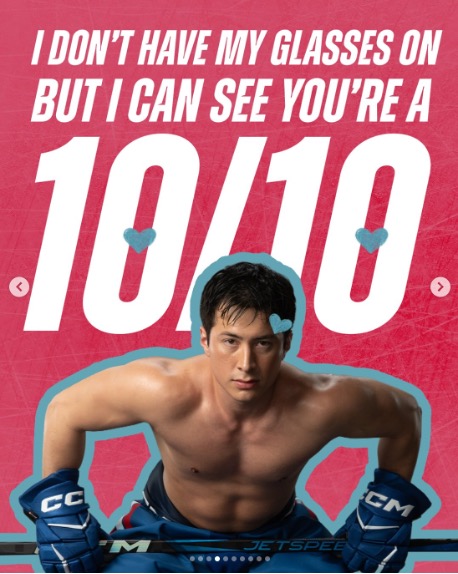
What is perhaps most socially significant is that cisgender heterosexual women and queer women are seeing themselves in Heated Rivalry. This resonance stems not only from the ‘feeling seeing’ of the racial objectification of Shane, the oppressive Russian cultural expectations carried by Ilya, and the crushing internalized homophobia faced by Scott Hunter, but also our empathy for these tensions combined with the priority the series gives to bodily joy and, frankly, hot sex. Despite the tensions and complications of life, we ‘feel see’ the characters connecting intimately, honestly and physically, and these are not representational territories historically granted to female subjects or audiences in film and media culture.
Thus, the oppressive cisheteronormativity felt by the lead characters, and notably the tokenisation felt by Shane Hollander, offers recognition of othering and intersectional experience. And yet, by expressing love for each other beyond these tensions, the private expressions of love and lust become a kind of returned gaze — a feeling of being seen, and returning a gaze that is unabashedly lustful, and finds not only physical pleasure but emotional connection, support, and reciprocity.
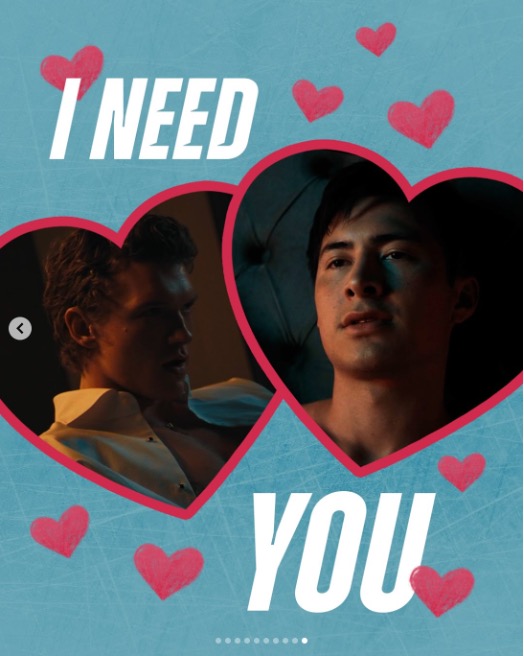
Ilya’s line “I’m coming to the cottage” is a scream-worthy moment replayed across social media viewing party clips precisely because ‘feeling seeing’ is the precipice of joy and connection. The series’ consistent choice to tune out the objectifying noise of external events, instead leaning into the characters’ deep intimate connections, is a refusal of an othering gaze, and centres bodily and emotional pleasure. In these ways, Heated Rivalry has embodied the female gaze, delivering a journey of heat and tenderness, with a side of sports, political and social commentary that has us all fired up. It is in this joy, heat and connection in spite of otherness that the series offers a salve and respite, and a model for future productions willing to centre the relieving and joyful power of the female gaze.
Ki Wight, PhD, is a critical media studies educator and researcher with a focus on better understanding and transforming the relationships between media education practices, media cultures and social justice movements. Her educational work engages critical and anti-colonial pedagogy, social justice education practices, and critical studies on race, gender, sexuality, media and culture. She is an Assistant Professor and Educational Developer at Emily Carr University of Art + Design in Vancouver, Canada.
Linkedin: https://www.linkedin.com/in/kiwight/
Photo credits: Instagram @heatedrivalrycrave and @cravecanada (Canadian broadcaster Crave handles)
References
Bell Media. (2026, January 29). From Capital to the Cottage: Prime Minister Mark Carney Meets Crave Original’s HEATED RIVALRY Stars. https://www.bellmedia.ca/the-lede/press/from-the-capital-to-the-cottage-prime-minister-mark-carney-meets-crave-originals-heated-rivalry-stars-hudson-williams-and-sophie-nelisse-and-creators-jacob-tierney-and-brendan-brady-at-prim/
Soloway, J. (2016, September 11). Joey Soloway on The Female Gaze | MASTER CLASS | TIFF 2016 .https://www.youtube.com/watch?v=pnBvppooD9I
 Cinema and Social Justice PROJECT
Leave a comment