
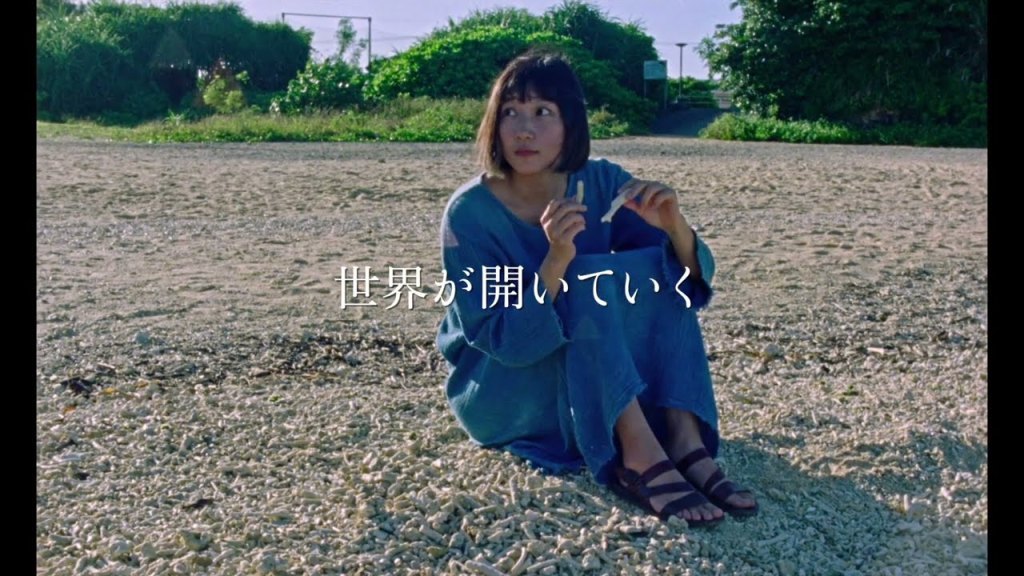
Aleix Rodríguez Gracia
Japanese cinema travels easily across borders. Its auteurs circulate through Cannes, Venice, and Berlin; its studios command global visibility; its aesthetics are meticulously studied and archived. From afar, it presents itself as a tradition of striking internal consistency, one that has absorbed modern transformations while maintaining a distinct cultural lineage.
Such consistency emerged from a tightly organized production system. During the postwar decades, major studios such as Shochiku, Toho and Nikkatsu established durable production models, cultivated long-standing professional networks, and consolidated recognizable signatures of authorship. The filmmakers shaped within this framework came to define the international image of Japanese cinema. Women were present across production cultures—as editors, script supervisors, performers, and assistants, while directorial roles for women remained comparatively rare. A few significant precedents appeared, most notably Kinuyo Tanaka, though these individual successes did little to transform the mechanisms through which the system renewed itself. The canon formed in this period continues to influence how Japanese cinema is taught, historicized, and circulated. Over the past three decades, change has unfolded primarily in the conditions of access to filmmaking.
Digital technologies in the 1990s and 2000s reduced production costs and eased reliance on studio infrastructures. Film education expanded. Independent festivals—including the Yamagata International Documentary Film Festival and the Pia Film Festival—opened additional exhibition pathways and offered early visibility to emerging filmmakers. International co-productions and streaming platforms further reconfigured distribution patterns. Established networks retained influence, while adjacent circuits developed alongside them, allowing creative authority to circulate across multiple institutional settings rather than a single industrial centre. Within this evolving framework, several women directors have shaped distinctive trajectories.
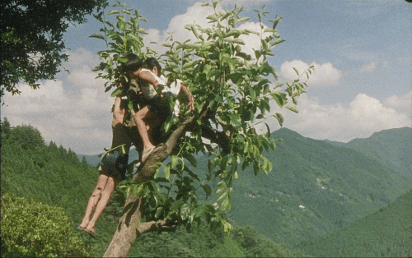
Among the most internationally visible is Naomi Kawase, who began working outside metropolitan studio centres through autobiographical video projects, before moving into widely recognized feature films. Her career illustrates how festival circulation can function as a parallel legitimizing structure, particularly when domestic financing operates cautiously. Critical discourse frequently describes her work as “intimate” or “personal,” terms that appear descriptive while subtly calibrating expectations about scale and ambition. Reception, in this sense, participates in defining the contours of authorship.
A different configuration appears in the work of Yuki Tanada. Alternating between independent production and commercially supported projects, she attends to precarious labour, romantic uncertainty, and the textures of contemporary urban existence. Her protagonists inhabit ordinary dilemmas—employment, desire, self-sufficiency—without symbolic overdetermination. Female subjectivity occupies the narrative centre as a matter of course. The everyday ceases to function as background and becomes the primary site of dramatic attention, subtly recalibrating narrative emphasis within familiar genres.
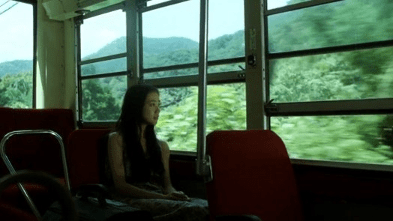
Operating further from conventional production models, Kaori Oda situates her practice between documentary and essay film, often across national contexts. With transnational training and circulation largely within festival and art-house environments, her work underscores another feature of the present moment: continuity increasingly depends on geographic and institutional mobility. Financing, collaboration, and exhibition unfold across intersecting cultural spheres, dispersing the locus of validation.
Recent surveys by the Japan Institute of the Moving Image and related industry reports suggest that the proportion of women working behind the camera in Japan has increased slowly since the 2010s, although they remain a clear minority within feature film production. [i] Statistical growth, however, captures only part of the picture. Longevity remains a crucial measure: the transition from debut feature to sustained production, from festival visibility to durable financing. Entry points have multiplied; long-term consolidation proceeds more unevenly.
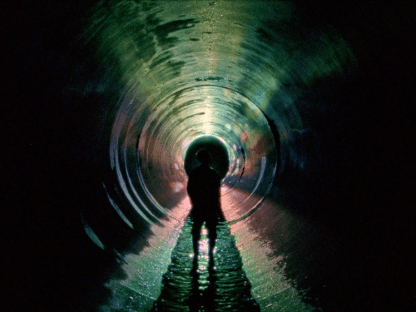
Japan publicly affirms gender equality, and women complete film programs in substantial numbers. The distance between training and continued authorship reflects the ways opportunity circulates through production committees, mentorship networks, and professional affiliations that privilege continuity. Institutional memory favours those already embedded within its structures.
Contemporary Japanese women filmmakers do not coalesce into a unified movement, nor do they frame their work primarily as corrective intervention. Their presence gradually expands the parameters within which cinematic authority operates. A national cinema long praised for its attentiveness to everyday life now witnesses a subtle redistribution of who articulates that everyday experience. The shift unfolds through persistence, negotiation, and the steady redefinition of authorship within a changing audiovisual ecology.
Aleix Rodríguez Gracia is a predoctoral researcher in the cinema research group at the Department of Communication, Pompeu Fabra University. He holds a BA in humanities and an MA in contemporary film and audio-visual studies from the same university. His doctoral project examines narrative and aesthetic frameworks in Asian Cinema. His research interests include image theory, the ethics of representation and the relationship between cinema and literature. He also works as an academic publishing editor at the Universitat Oberta de Catalunya (UOC) and as a research support officer in the Group of Analytical Sociology and Institutional Design (GSADI) analytical sociology group.
ORCID: https://orcid.org/0009-0003-4314-344X
Instagram: @a_l_eix
Twitter/X: @AleixARG
[i] See Smith, S. L., Choueiti, M., & Pieper, K. (2019). Inclusion in the director’s chair? Gender, race/ethnicity, and age of directors across 1,200 top films from 2007 to 2018. Los Angeles, CA: USC Annenberg Inclusion Initiative.
Japanese Film Project. (2021). Survey on gender equality in the Japanese film industry. Tokyo: The Japan Foundation.
 Cinema and Social Justice PROJECT
Leave a comment