
Catherine Fowler
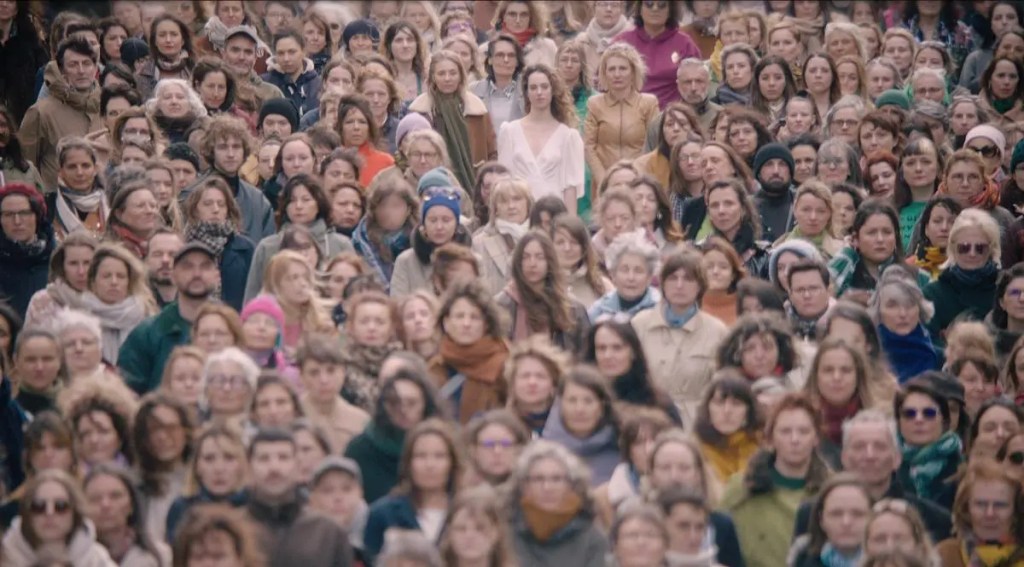
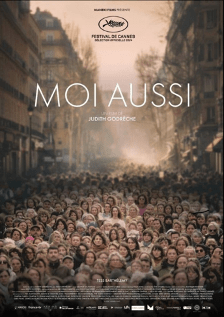
“At the cinema, unlike television, we look up at the screen. When we watch television we look down”. This reverent judgement by arthouse darling Jean Luc Godard is quoted towards the start of actress Judith Godrèche’s memoir Prière de remettre en ordre avant de quitter les lieux / Please tidy up before leaving the premises (Seuil),published in January 2026. Her memoir revolves around her own abuse by director Benoit Jacquot throughout a controlling relationship[i] during which he moved her in with him when she was 14 and he was 39. The book leaves us in no doubt that such attitudes of reverence have hindered actions that may have otherwise accounted for and stopped sexist and sexual violence (in French – VSS). In 2024, Godrèche sparked the launch of a commission by L’Assemblée Nationale tasked with investigating incidences of VSS in the country’s creative industries. Of equal interest is how her response has taken creative forms, through a tv series, Icon of French cinema (2023), a crowd-sourced short film Moi Aussi (2024), which was screened at the Cannes Festival, and now her memoir. French cinema’s #MeToo moment has been charged with ambivalence, so what do Godrèche’s concerted efforts tell us about what is missed, overlooked or ignored when we raise our eyes to arthouse screens?
First, Godrèche’s creative projects tell us that art cinema’s artist/muse relation, accepted by all those who raise their eyes to the screen, belongs with “problems of perceptual habit” (Levine, 2015: 593). For Caroline Levine, the commonness of structures such as sexism, racism and heteronormativity means that we “misperceive … deny … or take them for granted”. (595). Broadly, thinking of VSS as linked with perceptual habit helps explain why all declarations of abuse via the MeToo hashtag have not been created equal, since such personal testimonies nevertheless leave “ordinary hierarchies” (595) in place. More narrowly, the perceptual habit of seeing actresses as a vehicle for inspiring and delivering the auteurs’ vision, worth nothing in themselves, annuls the director from any ethical responsibility towards the muse. Accordingly, despite contributing an account of her experience of Harvey Weinstein’s despicable behaviour to Jodi Kantor and Megan Twohey’s investigation in 2017, at that time Godrèche thought of herself as a ‘faulty witness’ (her term) because of her relationship with Jacquot and excluded herself from further testimony.

Second, it is via her creative projects that Godrèche provides us with lessons in how to cut through the reverence and call out the attitudes that sustain VSS. In her short film there are no raised or averted eyes, instead 1000 survivors who answered Godrèche’s call to gather in a boulevard in Paris are filmed looking straight at the camera, with defiance. In her memoir she writes of the many adults who chose to overlook Jacquot’s acts. But it is in her tv series that we see her shake off the ‘faulty witness’. The auto-fictional series deals with reverberating stories of sexual coercion, including the young actress-Judith’s story and that of adult-Judith’s 16 year old daughter, Zoe, who has a crush on her 30-something dance master Marc.
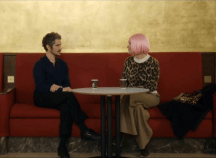

In one scene Judith meets with Marc to attempt to discern his intentions towards Zoe. When Marc praises Zoe’s mix of youth and maturity, but then adds that she’s no different from the adult dancers, Judith disagrees: “She’s younger and therefore more malleable”. Marc disengages from her and raises his eyes above her head (as if receiving inspiration) as he says: “The younger she is the farther she can go; less resistance” and continues “more submission …to the artform I mean”. Judith, who has been staring at him piercingly through this exchange tilts her head towards him and responds, in a low voice, “Be careful. You could end up in jail”. By refusing the foreclosure that is explicit in Marc’s quick re-adjustment, Judith explicitly declines to submit to “problems of perceptual habit” around artist and muse, and calls out the unequal power relations inherent in the artist/muse relationship which Marc insinuates. Godrèche thereby creates for herself a witness who is unassailable and bold and who has gathered followers able to see through rather than gaze up at arthouse screens.
[i] Godrèche refers to their relationship as ‘une relation d’emprise’…emprise assumes that at the time the offence was committed the victim had no will of their own.
Levine, Caroline. 2015. ‘The Strange Familiar: Structure, Infrastructure, and Adichie’s Americanah’ MFS Modern Fiction Studies 61(4) Winter, 587-605.
Catherine Fowler is Professor in Film and Media and Otago University, New Zealand. She writes and researches on the work of women filmmakers, artists, moving image and video essays.
 Cinema and Social Justice PROJECT
Leave a comment